
Best Hardware Wallets for Beginners in 2026: Secure and Easy-to-Use Options

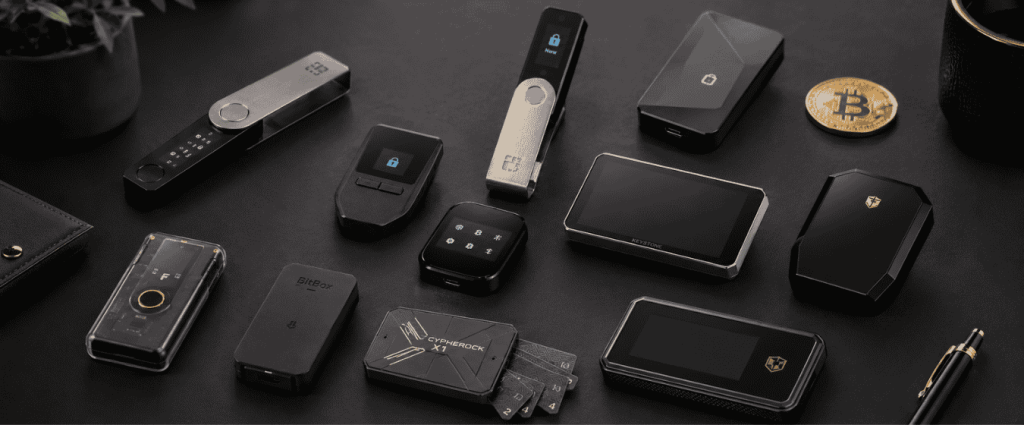
Collection of popular cryptocurrency hardware wallets displayed on a desk alongside a Bitcoin coin and tech accessories.

Keeping your crypto on an exchange is like leaving cash on a park bench — convenient, but risky. In 2026, with over $3 trillion in digital assets circulating globally, self-custody has shifted from niche advice to essential practice. Hardware wallets — physical devices that store your private keys offline — are the gold standard for protecting Bitcoin, Ethereum, and thousands of other coins.

The good news for beginners: these devices are no longer the complicated gadgets they once were. Today’s best hardware wallets combine military-grade security with plug-and-play simplicity. Whether you’re safeguarding your first $500 in Bitcoin or building a serious long-term portfolio, there’s a device built for you.

Here are the 10 best hardware wallets for beginners in 2026, ranked for ease of use, security, and value.

1. Ledger Nano X — Best Overall for Beginners

The Ledger Nano X remains the most recognized name in hardware wallets for good reason. It supports over 5,500 coins and tokens, connects via Bluetooth to iOS and Android, and pairs with the Ledger Live app for a seamless desktop and mobile experience.

Its Secure Element chip (the same technology used in passports and credit cards) stores private keys in an isolated environment that no internet-connected software can reach. For beginners, the guided setup process in Ledger Live takes less than 10 minutes, and the interface makes it easy to send, receive, and stake crypto without confusion.

Why it matters: Bluetooth connectivity and a massive coin library make the Nano X the most versatile beginner option on the market.

Growth potential: Ledger’s ecosystem continues expanding with NFT support, DeFi integrations, and a growing hardware wallet market projected to exceed $2 billion by 2028.

2. Trezor Model One — Best Budget Pick

Trezor launched the world’s first hardware wallet in 2014, and the Model One still delivers exceptional security at a price under $70. It supports Bitcoin, Ethereum, and hundreds of ERC-20 tokens through the Trezor Suite desktop app.

The open-source firmware is a major trust factor — security researchers worldwide can audit the code. For beginners focused on Bitcoin and major altcoins, the Model One covers every essential use case without unnecessary complexity.

Why it matters: Open-source, affordable, and battle-tested over a decade — it’s the smartest entry-level buy for security-conscious newcomers.

3. Trezor Safe 5 — Best Premium Trezor Option

Trezor’s flagship 2025 upgrade, the Safe 5, brings a color touchscreen, enhanced PIN security, and support for passphrase protection. The device uses a discrete secure element alongside open-source firmware — a rare combination that balances transparency with chip-level security.

It supports over 9,000 coins and integrates directly with MetaMask and other popular Web3 wallets. For beginners willing to spend more upfront, the Safe 5 eliminates nearly every learning curve with its intuitive touch interface.

Why it matters: The touchscreen dramatically reduces setup errors — a common pain point for first-time hardware wallet users.

4. Coldcard Mk4 — Best for Bitcoin Purists

The Coldcard Mk4 is purpose-built for Bitcoin and is widely considered the most secure consumer hardware wallet available. It supports air-gapped transactions (signing without ever connecting to a computer), advanced multi-signature setups, and PSBT (Partially Signed Bitcoin Transactions).

It’s not the most beginner-friendly option out of the box, but Coldcard’s documentation and the active Bitcoin community make the learning curve manageable. For those serious about Bitcoin-only security, no device comes close.

Why it matters: If Bitcoin self-custody is your primary goal and security is non-negotiable, the Mk4 sets the standard.

5. Keystone 3 Pro — Best Air-Gapped Option for Beginners

The Keystone 3 Pro operates completely offline — it communicates with software wallets via QR codes rather than USB or Bluetooth. This air-gapped design means hackers have no physical connection to exploit.

It features a large 4-inch touchscreen, a rechargeable battery, and integrates natively with MetaMask, Rabby, and major DeFi platforms. Three separate security chips protect the seed phrase. For beginners who want air-gap security without an intimidating setup, Keystone is the standout choice in 2026.

Why it matters: QR-based signing makes advanced security accessible to users who aren’t technical experts.

6. Foundation Passport — Best Open-Source Air-Gap Wallet

The Foundation Passport is another fully open-source, air-gapped hardware wallet designed specifically for Bitcoin. It’s powered by AA batteries (no charging required), uses QR codes for transaction signing, and ships with a transparent case so users can visually verify no hidden components are present.

Foundation has built a reputation for radical transparency, publishing all hardware schematics and firmware publicly. The Passport pairs with its own companion app, Envoy, which guides beginners through setup step by step.

Why it matters: Transparency and offline operation make the Passport a top pick for privacy-focused beginners entering Bitcoin long-term storage.

7. BitBox02 — Best for Simplicity and Privacy

Swiss-made by Shift Crypto, the BitBox02 comes in two editions: Bitcoin-only and multi-edition. The Bitcoin-only edition is one of the cleanest hardware wallets out there, with a minimal design, open-source firmware, and a companion desktop app (BitBoxApp) that is very beginner-friendly.

It uses a microSD card for backup instead of a traditional 24-word seed phrase written on paper, which reduces human error during recovery. For privacy-conscious beginners who want simplicity without sacrificing security, the BitBox02 is a consistent top performer.

Why it matters: The microSD backup system solves one of the biggest failure points for new crypto users — mishandling seed phrases.

8. Ledger Stax — Best for NFT and Multi-Asset Users

The Ledger Stax features an E Ink touchscreen that wraps around the device’s edge, allowing users to display their NFT collection or a custom image on the lock screen. More than just looks, it’s compatible with the entire Ledger ecosystem: 5,500+ assets, Bluetooth connectivity, and Ledger Live integration.

For beginners entering crypto through NFTs or multi-chain DeFi, the Stax offers an experience closer to a smartphone than a traditional hardware device. It’s the most premium Ledger product and priced accordingly, but the visual interface genuinely reduces complexity for new users.

Why it matters: NFT display and an intuitive E Ink interface make advanced self-custody feel approachable for the next generation of crypto users.

9. Cypherock X1 — Best for Seed Phrase Backup

The Cypherock X1 completely ditches the seed phrase, a radical departure from every other wallet on this list. Instead, it uses Shamir’s Secret Sharing to split the private key across one main device and four card “shards.” You need any two of the five components to recover your wallet.

This means no single point of failure. If someone finds one card, they can’t access your funds. For beginners terrified of losing a handwritten seed phrase, Cypherock is the most innovative security architecture in 2026.

Why it matters: Distributed key storage solves the single biggest fear most beginners have about hardware wallets: losing access forever.

10. NGRAVE ZERO — Best High-End Option for Serious Beginners

The NGRAVE ZERO is EAL7 security-certified. The highest certification obtainable for any consumer hardware wallet. It operates entirely air-gapped via QR codes, has no USB or Bluetooth connectivity, and pairs with the NGRAVE LIQUID app for portfolio management.

Its companion product, the GRAPHENE stainless steel backup plate, offers fireproof and waterproof seed phrase storage. The device is priced at the premium end, but for beginners making large crypto purchases from the start, the security-to-investment ratio is hard to beat.

Why it matters: EAL7 certification and zero connectivity make this the most objectively secure beginner option when protecting significant assets.

Conclusion

Hardware wallets are no longer optional for anyone serious about crypto. In 2026, the best options for beginners balance ease of use with real security — and the devices on this list prove you don’t have to sacrifice one for the other. For most newcomers, the Ledger Nano X offers the most complete package. Budget-conscious buyers will find the Trezor Model One more than sufficient. And if Bitcoin is your only focus, the Coldcard Mk4 or Foundation Passport sets the gold standard.

Whichever device you choose, the most important step is taking self-custody seriously. Hardware wallets aren’t accessories — they’re the safest home your crypto can have.

Frequently Asked Questions (FAQs)

Q1: What is the best hardware wallet for a complete beginner in 2026?

The Ledger Nano X is widely considered the best starting point. It supports thousands of coins, connects via Bluetooth to your phone, and walks you through setup with a beginner-friendly app. If you want a cheaper entry point, the Trezor Model One covers all the essentials.

Q2: Are hardware wallets really necessary, or is an exchange wallet safe enough?

Exchange wallets are convenient but come with real risks — hacks, insolvencies, and account freezes have cost users billions over the years. Hardware wallets give you full control of your private keys, which means only you can access your funds. For any amount you’re not actively trading, a hardware wallet is strongly recommended.

Q3: What happens if I lose my hardware wallet?

Your funds aren’t stored on the device itself — they live on the blockchain. Your recovery seed phrase (usually 12 or 24 words) is all you need to restore access on a new device. Keep your seed phrase offline, in a secure location, and never share it with anyone.

Q4: Can a hardware wallet be hacked?

Hardware wallets are designed to keep private keys offline and isolated from internet-connected systems, making remote hacking essentially impossible. Physical attacks are theoretically possible but require sophisticated equipment and direct access to the device. Always buy from official manufacturers, never secondhand.

Q5: How much should a beginner spend on a hardware wallet?

Quality hardware wallets range from around $60 (Trezor Model One) to $400+ (NGRAVE ZERO). For most beginners, spending $80–$150 covers devices with excellent security and usability. It makes no sense to spend $250 on a wallet for $100 worth of Bitcoin; invest in proportion to the value of the crypto you are protecting.


Top 5 Crypto Payment Gateways in 2026 for Faster & Cheaper Transactions

Futuristic blockchain network illustration showing interconnected crypto payment nodes across a global digital map for Web3 payments and multi-chain transactions

Accepting cryptocurrency isn’t a novelty anymore. It’s infrastructure. With stablecoin transaction volumes reaching $33 trillion in 2025 and regulatory frameworks like the GENIUS Act bringing clarity to digital asset payments in the US, businesses that don’t accept crypto are leaving money on the table.

But the landscape has changed. Early payment gateways were built for a single-chain world: accept Bitcoin, convert to dollars, settle to a bank account. That model still works for traditional e-commerce, but in 2026, users hold assets across dozens of networks. The payment problem has evolved.

Today’s best crypto payment gateways handle multi-chain complexity, reduce settlement times from days to minutes, and cut transaction costs by up to 90% compared to traditional card networks. Here are the five platforms leading the charge.

BTCPay Server: The Open-Source Standard

BTCPay Server remains the gold standard for merchants who want full control over their payment infrastructure. It’s self-hosted, open-source, and requires no third-party intermediaries. You run the software on your own server, which means no custodial risk, no account freezes, and no forced KYC processes.

The platform supports Bitcoin, Lightning Network, and major altcoins, including Ethereum and Litecoin. For businesses concerned about volatility, BTCPay integrates with services that auto-convert payments to stablecoins or fiat. The Lightning Network integration is particularly valuable in 2026, enabling near-instant Bitcoin settlements with fees often under one cent.

BTCPay isn’t the easiest option to set up, but it offers something no hosted gateway can: complete sovereignty over your payment stack. Businesses from independent retailers to activist organizations use it precisely because there’s no corporate intermediary that can shut them down.

The trade-off is technical overhead. You need server infrastructure and some development capability to customize the experience. But for merchants who understand the stakes, that’s a feature, not a bug.

Coinbase Commerce: Enterprise Trust Meets Crypto Rails

Coinbase Commerce brings the institutional credibility of one of the world’s largest exchanges to cryptocurrency payments. The platform supports Bitcoin, Ethereum, Litecoin, Bitcoin Cash, Dogecoin, and USDC, with direct settlement to merchant wallets or automatic conversion to USD.

What separates Coinbase Commerce from competitors is regulatory compliance and brand recognition. When customers see the Coinbase brand at checkout, trust barriers drop significantly. That matters more than most businesses realize. Crypto payments still carry skepticism among mainstream consumers, and a familiar name reduces friction.

The platform integrates with Shopify, WooCommerce, and most major e-commerce systems through simple plugins. There are no monthly fees, just a 1% transaction fee on crypto-to-fiat conversions. For merchants keeping payments in crypto, there’s no fee at all.

Coinbase Commerce works particularly well for US-based businesses navigating regulatory uncertainty. The parent company maintains active regulatory licenses and relationships with US authorities, which provides a compliance buffer smaller platforms can’t match.

BitPay: The Veteran Still Delivering

BitPay has been processing crypto payments since 2011, and that longevity shows in the platform’s maturity. It supports settlements in Bitcoin, Ethereum, and multiple stablecoins, with automatic conversion to fiat in over 38 countries and 150+ local currencies.

The real strength is global reach. BitPay maintains banking relationships and regulatory licenses across North America, Europe, and Latin America, enabling same-day USD, EUR, and GBP settlements. That’s critical for businesses operating internationally, where traditional payment processors often introduce multi-day delays and high currency conversion fees.

BitPay charges a 1% fee on transactions, which is competitive but not the cheapest. What you’re paying for is infrastructure that just works. The platform processes over $1 billion annually and has never been hacked, which matters when you’re handling customer funds.

The company also offers a BitPay Card, allowing merchants to spend their crypto earnings directly without conversion. It’s a small feature that reflects BitPay’s understanding of how businesses actually use these tools.

Triple-A: The Multi-Chain Specialist

Triple-A approaches crypto payments as a multi-chain problem. The platform supports over 100 cryptocurrencies across Bitcoin, Ethereum, BNB Chain, Polygon, Solana, and Tron networks. For businesses serving global customers with diverse asset holdings, this breadth matters.

The platform automatically detects which chain a customer is paying from and handles settlement accordingly. Users can pay from whichever wallet they prefer, and merchants receive funds in their chosen currency, whether that’s crypto or fiat. This flexibility has made Triple-A popular with Asian and Middle Eastern businesses, where multi-chain wallet usage is highest.

Triple-A also emphasizes compliance, offering built-in AML screening and transaction monitoring. For merchants in regulated industries like gaming or digital goods, that compliance layer reduces legal exposure without requiring separate vendor relationships.

Transaction fees start at 0.5% for crypto settlements and 1% for fiat conversions, making it one of the more cost-effective options for high-volume merchants. The platform integrates via API, payment buttons, or hosted checkout pages.

NOWPayments: Volume Play for Digital Businesses

NOWPayments targets digital businesses that need to move fast and integrate quickly. The platform supports over 300 cryptocurrencies and offers one of the simplest API implementations in the industry. Developers can integrate crypto payments in under an hour using pre-built libraries for Python, PHP, JavaScript, and other languages.

The platform charges between 0.4% and 0.5% per transaction, among the lowest rates available. There are no setup fees, no monthly minimums, and no custody requirements. Merchants can receive payments directly to their own wallets or use NOWPayments’ custodial option.

What makes NOWPayments particularly useful in 2026 is its focus on stablecoins and multi-chain support. Merchants can accept USDT across Ethereum, Tron, BNB Chain, and Polygon, giving customers flexibility while maintaining settlement predictability. For SaaS businesses and digital service providers, this combination of low fees and technical simplicity has proven compelling.

The platform also offers plugins for WooCommerce, PrestaShop, Magento, and other e-commerce systems, removing technical barriers for non-developer merchants.

What Actually Matters When Choosing a Gateway

The right crypto payment gateway depends on your business model and technical capacity. Self-hosted solutions like BTCPay Server offer maximum control and zero fees but require technical expertise. Enterprise options like Coinbase Commerce and BitPay provide regulatory cover and brand trust at the cost of transaction fees.

For global businesses, multi-chain support isn’t optional anymore. Customers hold assets across different networks, and forcing them to bridge or convert before paying adds unnecessary friction. Platforms that handle chain abstraction automatically will win.

Settlement speed and cost remain the core value proposition. Crypto payments should be faster and cheaper than cards, not equivalent. Gateways that deliver sub-one-second confirmations via Layer 2 networks or stablecoin rails are replacing slower Bitcoin-only solutions.

The payment gateway market in 2026 isn’t about novelty. It’s about infrastructure that works better than what came before. Businesses adopting these platforms aren’t making a bet on crypto’s future.

They’re responding to customer demand and margin pressure happening right now.

FAQs

What is a crypto payment gateway?

A crypto payment gateway is software that enables businesses to accept cryptocurrency payments from customers. It handles transaction detection, blockchain confirmations, and settlement, similar to how Stripe processes card payments but using blockchain networks instead of traditional banking rails.

Are crypto payment gateways cheaper than credit card processors?

Yes, typically. Most crypto payment gateways charge between 0.4% and 1% per transaction, compared to 2.5% to 3.5% for credit card processors. Stablecoin payments on Layer 2 networks often settle in seconds with fees under $0.10, significantly cheaper than card interchange fees.

Do I need to hold cryptocurrency to accept crypto payments?

No. Most payment gateways offer automatic conversion to fiat currency (USD, EUR, etc.) with settlement directly to your bank account. You can also choose to keep payments in stablecoins like USDC or convert only a percentage while holding the rest in crypto.

How long do crypto payment settlements take?

Settlement speed varies by cryptocurrency and network. Bitcoin confirmations take 10-60 minutes, while stablecoin payments on networks like Polygon or Solana settle in under 10 seconds. Lightning Network payments are instant. Most gateways consider payments final after one to three blockchain confirmations.

Is it legal to accept cryptocurrency payments for my business?

Yes, in most jurisdictions, including the US, EU, and UK. However, you must comply with local tax reporting requirements and treat crypto payments as taxable income at the fair market value when received. Some industries like banking and gambling face additional restrictions. Consult a tax professional familiar with cryptocurrency reporting in your region.

Crypto News This Week: $285M Hack, Ethereum Upgrade, AI Tokens Pump & DeFi Update

Futuristic crypto illustration showing Ethereum upgrade, AI tokens growth, DeFi hack, Solana memecoins, and global regulation themes

The first week of April 2026 has delivered everything crypto markets are known for: a massive security breach, regulatory anticipation, and wild sector rotations that left most traders scratching their heads. While Bitcoin continues its seemingly endless drift between $63,000 and $75,000, the real action happened elsewhere. From North Korean hackers pulling off one of the year’s biggest heists to AI tokens defying gravity in an otherwise brutal market, this week proved that crypto never sleeps, even when it looks comatose.

The Drift Protocol Disaster: When $285 Million Vanishes in 12 Minutes

Let’s start with the elephant in the room. On April 1st, Drift Protocol got absolutely wrecked. Not April Fools; actually wrecked. The Solana-based decentralized perpetual futures exchange, which had been quietly chugging along as one of DeFi’s more reliable platforms, saw roughly $285 million drain from its vaults in what can only be described as a masterclass in patience and precision.

This wasn’t some kid stumbling onto a smart contract bug. According to blockchain intelligence firm TRM Labs, the attack bore all the hallmarks of North Korean state-sponsored hackers, the same crews behind the 2022 Wormhole bridge hack that cost $326 million. What made this particularly nasty was the timeline. The preparation started weeks earlier, on March 11th, when attackers pulled 10 ETH from Tornado Cash and began setting the stage.

Here’s where it gets technical but important: they manufactured an entirely fake token called CarbonVote (CVT), seeded minimal liquidity, ran some wash trading to create price history, and somehow convinced Drift’s oracles that this worthless token was legitimate collateral worth hundreds of millions. Then, through what appears to be social engineering, they got protocol signers to pre-authorize transactions that looked routine but were actually loaded weapons.

The kill shot came on March 27th when Drift’s governance removed time locks from administrative actions. That elimination of the detection window was the final piece. On April 1st, those pre-signed transactions executed. CVT got listed as valid collateral. Withdrawal limits got cranked to absurd levels. And then, 31 withdrawal transactions over 12 minutes pulled real assets like USDC and JLP straight out of the protocol.

Most of the stolen funds bridged to Ethereum within hours. The DRIFT token tanked 40%. Deposits and withdrawals got suspended. And the contagion spread fast. Over 20 protocols that had exposure to Drift felt the pain. Prime Numbers Fi reported millions in losses. Carrot Protocol paused functions after losing half its total value locked. Pyra Protocol disabled withdrawals entirely, trapping user funds.

The lesson here isn’t particularly new, but it’s worth repeating until DeFi learns it: timelocks aren’t optional decoration. They’re the difference between catching an attack during staging and watching it execute perfectly. Drift’s governance removed that safeguard five days before the exploit. That decision alone turned a preventable incident into 2026’s largest DeFi hack.

Market Conditions: The Great Apathy

While Drift burned, the broader crypto market continued its zombie walk through what’s shaping up to be one of the strangest periods in recent memory. Bitcoin’s been stuck in its $63K to $75K range for over two months now. Trading volume collapsed more than 35% week over week. The Fear and Greed Index hit 9 out of 100, “Extreme Fear” territory, and has camped there for 46 consecutive days.

You know what’s wild? Gold and the S&P 500 bottomed and rebounded over the past few weeks. Traditional risk assets found their footing. Crypto just didn’t follow. That decoupling tells you something important about capital flows. Or rather, the lack of them. Retail’s tuned out. They’re not buying dips anymore. They’re not panic-selling either. They’ve just left the building.

The on-chain data paints an even grimmer picture. Small retail wallets spent the last two months buying every dip, expecting Bitcoin to rocket back to six figures. Meanwhile, smart money, the wallets that historically get it right, have been quietly distributing. That divergence rarely ends well for the optimists.

But here’s the thing about low-volatility, low-volume grinds: they don’t last forever. Historically, when crypto markets go this quiet, they’re building pressure for a move. The question isn’t if something breaks; it’s when and in which direction. Many analysts are closely watching Bitcoin price prediction trends to gauge the next major movement.

Ethereum’s Glamsterdam: The Upgrade Everyone’s Watching

If there’s a legitimate catalyst on the horizon, it’s Ethereum’s Glamsterdam upgrade slated for June. This isn’t some minor optimization. We’re talking about increasing the gas limit from 60 million to 200 million per block and scaling throughput to 10,000 transactions per second. That’s the biggest technical overhaul since the Merge back in 2022.

History suggests this matters for price action. The Merge triggered a 35% rally in the two months before launch. Shanghai’s staking withdrawal upgrade drew nearly 40%. Dencun pushed ETH up about 20%. The pattern’s consistent: markets front-run major Ethereum upgrades by four to six weeks.

Right now, ETH trades around $2,000 to $2,100, down roughly 60% from its cycle high. If the historical playbook holds and Glamsterdam launches on schedule in June, we should start seeing positioning in April. Some analysts are eyeing the $2,700 to $2,900 zone as a realistic target if upgrade momentum builds and nothing goes catastrophically wrong with testnet deployments.

But, and this is a meaningful but, if Glamsterdam gets delayed to Q3, all bets are off. Ethereum’s been in consolidation hell for months. Institutional ETF flows have been brutal, with $207 million in net outflows during a single week in late March while Bitcoin ETFs kept stacking inflows. The divergence between institutional appetite for BTC versus ETH has never been wider. Investors tracking Ethereum network upgrades should pay close attention to the development timeline.

AI Tokens: The Only Thing Working

Here’s the plot twist nobody saw coming: while everything else bleeds or flatlines, AI crypto tokens are absolutely ripping. Over the last four weeks, the AI sector is the only category posting positive returns. And we’re not talking modest gains.

Bittensor (TAO) surged 67.5%. Render (RENDER) climbed 21%. SIREN, whatever the hell that is, exploded 540% in a month. FET gained 44%. When the rest of crypto looks like a morgue, AI tokens are throwing a party.

The narrative makes sense on paper. AI and crypto are the two dominant tech stories of our time. Combine them, and you get decentralized machine learning networks, AI-powered DeFi strategies, and infrastructure plays that sound futuristic enough to pull capital even in a risk-off environment.

But let’s be real: this looks like classic sector rotation. In crypto, these things move in cycles. First, a sector rips (we’re here). Then it consolidates for three to four weeks while early winners correct. Then, if the thesis holds, it rips again even harder. We’ve seen this movie with meme coins. We’ve seen it with real-world asset tokenization. The question is whether AI tokens are building legitimate value or just the current hot narrative before capital rotates somewhere else.

One trader on X put it bluntly: “I’m DCAing into TAO every single day until we hit $500. ” I honestly believe this will be one of the best-performing assets of 2026. “That kind of conviction either ages like fine wine or curdled milk. No middle ground. For those interested in this sector, understanding how AI and blockchain technology converge is crucial.

Solana’s Memecoin Mania Returns

Speaking of narratives, Solana memecoins are showing signs of life after months in the wilderness. Weekly DEX volume on Solana surged from a low of $40.5 billion back in August 2025 to $87.8 billion in the last week of March. That’s not a typo. Nearly doubled in seven months.

Tokens like BONK, PENGU, TRUMP, PIPPIN, and POPCAT are seeing renewed trading activity. Whether this is sustainable or just another pump-and-dump cycle remains to be seen, but the volume doesn’t lie. People are trading Solana memecoins again, and that tends to drive ecosystem activity even when the broader market looks dead.

Regulatory Tea Leaves: The CLARITY Act

On the regulatory front, all eyes are on the CLARITY Act, which should see its draft released sometime in early April. This would be the first major U.S. crypto regulatory framework to reach the full Senate, and institutional allocators are watching closely.

The bill’s been in limbo for months, facing pushback and revisions, but the fact that it’s advancing at all signals something important: Washington is trying to build actual rules instead of regulation by enforcement. Whether those rules end up being workable or a disaster for innovation remains an open question, but clarity beats ambiguity. Usually.

Globally, we’re seeing a coordinated push toward bringing crypto into existing regulatory perimeters. The UK is incorporating digital assets into its Financial Services and Markets Act framework. The EU’s MiCA regulations are shaping how stablecoins and exchanges operate across member states. Even jurisdictions that were hostile, Kenya and Hong Kong, are warming up.

The common thread: governments want oversight, licensing requirements, and consumer protections without necessarily killing the industry. That’s a dramatic shift from the “ban first, ask questions later” approach we saw in places like Bolivia and Bangladesh a few years back. Those following cryptocurrency regulation developments should monitor these legislative changes closely.

What’s Next?

If this week taught us anything, it’s that crypto remains wildly unpredictable even when it looks calm. A $285 million hack executed with military precision. AI tokens defying a bear market. Ethereum is gearing up for its biggest upgrade in years. Regulatory frameworks advancing. Memecoins are making a comeback on Solana.

And through it all, Bitcoin just keeps grinding sideways, accumulating frustration and potential energy. Something’s going to give. The funding rates show aggressive shorting on both BTC and ETH, which creates potential for a violent squeeze higher if sentiment shifts. But macroeconomic headwinds, geopolitical tensions, inflation concerns, and rate uncertainty continue weighing on risk assets broadly.

For traders and investors, the playbook seems straightforward even if execution isn’t: watch for the Glamsterdam upgrade timeline, keep an eye on AI token consolidation for potential re-entry points, and don’t ignore the regulatory developments that could reshape market structure overnight.

One thing’s certain: crypto isn’t boring. Even when it tries to be.

FAQs

Q: What happened with the Drift Protocol hack?

Drift Protocol, a Solana-based decentralized exchange, lost $285 million on April 1, 2026, in a sophisticated attack likely carried out by North Korean hackers. They used fake collateral tokens and social engineering to drain the protocol in just 12 minutes.

Q: When is Ethereum’s Glamsterdam upgrade launching?

The Glamsterdam upgrade is scheduled for June 2026. It aims to increase Ethereum’s gas limit from 60 million to 200 million and scale throughput to 10,000 transactions per second, making it the biggest technical upgrade since the 2022 Merge.

Q: Why are AI crypto tokens performing well?

AI tokens like Bittensor (TAO), Render (RENDER), and others have gained 20% to 67% recently because they combine two dominant tech narratives, artificial intelligence and blockchain, attracting capital even during broader market weakness.

Q: What is the CLARITY Act?

The CLARITY Act is proposed U.S. legislation expected to provide the first comprehensive regulatory framework for digital assets. Its draft release in early April 2026 could signal clearer rules for crypto companies and institutional investors.

Q: Is the crypto market in a bear market?

The market is in a consolidation phase rather than an outright bear market. Bitcoin has traded between $63,000 and $75,000 for over two months with extremely low volatility, while the Fear and Greed Index shows “Extreme Fear.” However, specific sectors like AI tokens are showing strong performance.