

Figure HELOC vs Ondo Finance Whitepaper Comparison: Which RWA Project Has the Stronger Vision?

Illustration comparing Figure HELOC and Ondo Finance as two real-world asset blockchain projects with lending and tokenized finance concepts.
  • Figure HELOC focuses on blockchain-powered home equity lending and institutional financial infrastructure.
  • Ondo Finance specializes in tokenizing real-world assets, particularly U.S. Treasury-backed investment products.
  • Figure prioritizes regulated lending and operational efficiency, while Ondo aims to build global on-chain capital markets.
  • Ondo offers a broader governance model and multi-chain strategy, whereas Figure emphasizes compliance and enterprise adoption.
  • Both projects strengthen the RWA ecosystem, but Ondo’s whitepaper presents a wider long-term vision beyond lending alone.

The race to bring traditional finance on-chain is accelerating, and Real-World Assets (RWAs) have become one of the fastest-growing sectors in crypto. From tokenized U.S. Treasuries to blockchain-powered lending, projects are finding new ways to connect conventional financial products with decentralized infrastructure.

Among the most recognized names are Figure HELOC and Ondo Finance. While both operate in the RWA ecosystem, they solve different problems and target different audiences.

Figure focuses on digitizing lending through blockchain infrastructure, while Ondo Finance specializes in tokenizing institutional-grade financial products such as U.S. Treasury funds.

This Figure HELOC vs Ondo Finance Whitepaper Comparison, examines how each project approaches technology, governance, token utility, and long-term vision to help readers understand which strategy appears more sustainable.

What Is Figure HELOC?

Figure HELOC is part of Figure Technologies’ blockchain-based lending ecosystem. The platform modernizes home equity lending by reducing paperwork, improving settlement speeds, and increasing transparency through blockchain technology.

Instead of building another decentralized lending protocol, Figure bridges traditional finance with blockchain infrastructure.

The project operates on the Provenance Blockchain, a purpose-built Layer 1 network designed for regulated financial assets and institutional adoption.

Its primary goal is simple: make lending faster, cheaper, and more transparent without forcing users to leave the traditional financial system.

What Is Ondo Finance?

Ondo Finance focuses on tokenizing institutional financial products.

Rather than replacing traditional finance, Ondo works alongside it by issuing blockchain-based representations of real-world assets, particularly U.S. Treasuries and money market instruments.

Its ecosystem gives crypto investors access to stable, yield-generating assets that historically required traditional brokerage accounts.

Ondo has also expanded into blockchain infrastructure through Ondo Chain, aiming to create a purpose-built network for institutional-grade tokenized assets.

Vision and Mission

Figure HELOC

Figure’s whitepaper centers on transforming the lending industry through blockchain infrastructure.

Its objectives include:

  • Faster loan origination
  • Reduced operational costs
  • Automated settlement
  • Transparent asset ownership
  • Institutional adoption of blockchain technology

Instead of competing with banks, Figure wants to improve how financial institutions operate.

Ondo Finance

Ondo’s mission is broader.

The project aims to become the infrastructure layer for tokenized financial markets by bringing trillions of dollars worth of traditional assets onto public blockchains.

Its long-term vision includes:

  • Tokenized Treasury products
  • Institutional liquidity
  • Cross-chain interoperability
  • On-chain capital markets
  • Global access to regulated financial products

Blockchain Infrastructure

This is one of the biggest differences between both projects.

Figure HELOC

Figure relies on the Provenance Blockchain, a Layer 1 specifically built for regulated financial institutions.

The network emphasizes:

  • Compliance
  • Asset provenance
  • Identity verification
  • Institutional settlement
  • Financial record management

This makes it well suited for banks and lending companies.

Ondo Finance

Ondo initially launched on Ethereum but has expanded across multiple blockchain ecosystems.

Its roadmap includes Ondo Chain, designed specifically for institutional-grade tokenized securities.

Unlike Figure, Ondo focuses on interoperability rather than relying on a single blockchain ecosystem.

Token Utility

Token utility often determines whether a crypto project creates long-term value.

Figure

The Figure ecosystem primarily revolves around facilitating financial operations.

Its blockchain infrastructure supports lending, securitization, and settlement rather than encouraging speculative token use.

Utility comes from network participation and institutional adoption.

Ondo Finance

Ondo’s token plays a more active role within its ecosystem.

Utility includes:

  • Governance participation
  • Ecosystem incentives
  • Community proposals
  • Protocol development

As tokenized assets grow, governance could become increasingly important.

Governance Model

Governance reflects how decentralized a project intends to become.

Figure

Figure follows a more enterprise-oriented governance structure.

Decision-making largely supports regulatory compliance and institutional requirements.

This provides stability but offers less community participation.

Ondo

Ondo embraces decentralized governance.

Token holders can influence ecosystem decisions through governance proposals and voting mechanisms.

This model aligns more closely with traditional DeFi principles while still serving institutional markets.

Real-World Asset Strategy

Both projects belong to the RWA sector, but they target different opportunities.

Figure HELOC Ondo Finance
Home equity lending Tokenized Treasuries
Mortgage infrastructure Institutional investment products
Loan securitization Yield-bearing assets
Lending automation On-chain capital markets
Banking partnerships Cross-chain finance

Figure digitizes lending.

Ondo tokenizes investment products.

Neither strategy directly competes with the other, but both contribute to expanding blockchain’s role in traditional finance.

Security and Compliance

Institutional adoption depends heavily on regulation.

Figure’s ecosystem was built with compliance in mind from day one.

Its blockchain infrastructure supports identity verification, audit trails, and regulated financial processes.

Ondo also prioritizes compliance, particularly because it deals with regulated securities and Treasury-backed products.

Both projects recognize that institutional investors require more than decentralization. They need legal certainty and operational transparency.

Ecosystem Growth

Figure

Figure has processed billions of dollars in lending activity through its platform.

Its focus remains on expanding partnerships with banks, lenders, and financial institutions.

Growth depends largely on enterprise adoption.

Ondo Finance

Ondo has rapidly expanded across the broader crypto ecosystem.

Its products have attracted significant interest as demand for tokenized Treasury exposure continues to rise.

Partnerships with blockchain networks, custodians, and financial firms strengthen its position within the growing RWA market.

Strengths and Weaknesses

Figure HELOC

Strengths

  • Strong institutional focus
  • Proven lending infrastructure
  • Regulatory-first approach
  • Purpose-built blockchain

Weaknesses

  • Limited retail participation
  • Less decentralized governance
  • Narrower product focus

Ondo Finance

Strengths

  • Expanding RWA ecosystem
  • Strong governance model
  • Multi-chain strategy
  • Growing institutional adoption

Weaknesses

  • Greater competition in tokenized finance
  • The regulatory landscape continues evolving
  • Broader execution challenges

Which Project Has the Stronger Long-Term Vision?

The answer depends on how you define success.

If blockchain adoption in banking and lending becomes the dominant trend, Figure’s specialized infrastructure could prove highly valuable.

However, if tokenized securities, Treasury products, and on-chain capital markets become the primary growth engine for RWAs, Ondo Finance appears positioned to benefit from a much larger addressable market.

Figure is building better financial infrastructure.

Ondo is building a broader tokenized financial ecosystem.

Both strategies have merit, but Ondo’s whitepaper outlines a more expansive vision that extends beyond lending into the future of global capital markets.

Final Thoughts

The Figure HELOC vs Ondo Finance Whitepaper Comparison highlights two distinct approaches to bringing traditional finance onto blockchain.

Figure focuses on transforming lending through regulated blockchain infrastructure, while Ondo aims to create a global marketplace for tokenized financial assets.

Neither project should be viewed as a direct replacement for the other. Instead, they represent different layers of the rapidly evolving RWA ecosystem.

As tokenized assets continue gaining institutional attention, both platforms are likely to play important roles in shaping the future of blockchain-powered finance.

FAQs

Is Figure HELOC a DeFi protocol?

No. Figure primarily uses blockchain to improve traditional lending and financial infrastructure rather than offering decentralized lending services.

What is Ondo Finance best known for?

Ondo Finance is known for tokenizing institutional-grade financial products, including U.S. Treasury-backed assets.

Do Figure and Ondo compete directly?

Not entirely. Figure focuses on blockchain-based lending infrastructure, while Ondo specializes in tokenized investment products and on-chain capital markets.

Which project is more decentralized?

Ondo Finance has a more community-driven governance model, whereas Figure follows an enterprise-focused governance structure designed for regulated financial institutions.

Which project has the broader long-term vision?

Figure targets lending modernization, while Ondo aims to build infrastructure for global tokenized financial markets. Ondo’s vision is broader, but both projects address different segments of the expanding RWA ecosystem.

Disclaimer: This content is for informational and educational purposes only and should not be considered financial, investment, or legal advice. Always conduct your own research before investing in cryptocurrencies or blockchain-related assets. This article was originally published on AllCryptoWhitepapers.com
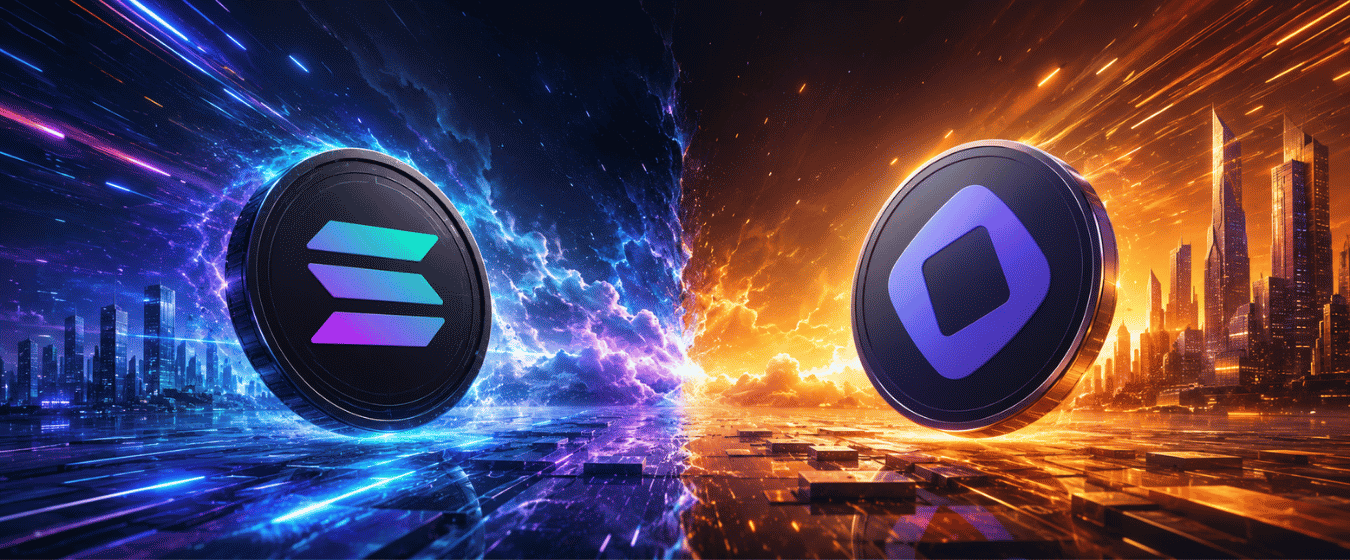

Solana vs Monad Whitepaper Comparison (2026)

A futuristic comparison of Solana and Monad blockchain architectures highlighting speed, scalability, and next-generation Layer 1 innovation.
  • Solana uses a custom architecture built around Proof of History (PoH) and the Sealevel parallel execution engine. 
  • Monad introduces MonadBFT and parallel EVM execution while remaining fully compatible with Ethereum applications. 
  • Solana prioritizes maximum performance through custom infrastructure. 
  • Monad focuses on combining Ethereum compatibility with significantly higher throughput. 
  • Both projects aim to solve blockchain scalability but follow fundamentally different technical paths.

For years, Solana has been one of the fastest and most widely discussed Layer 1 blockchains. Its architecture proved that high throughput and low transaction costs could attract developers building everything from decentralized finance (DeFi) platforms to NFT marketplaces and consumer applications.

Now, a new challenger has entered the conversation.

Monad has quickly become one of the most talked-about blockchain projects because it promises something developers have wanted for years: Solana-like performance with full Ethereum Virtual Machine (EVM) compatibility. Rather than asking developers to learn a new programming model, Monad aims to deliver high-speed execution while allowing existing Ethereum applications to migrate with minimal changes.

Although both networks focus on scalability, their technical philosophies are very different. Solana was designed from the ground up with a unique execution environment, while Monad builds on Ethereum’s ecosystem by rethinking how transactions are processed.

This comparison examines both projects from their official technical documentation and whitepapers to understand how each blockchain approaches performance, consensus, execution, developer experience, and long-term scalability.

Solana at a Glance

Launched in 2020, Solana was built to maximize transaction throughput without relying on Layer 2 solutions.

Its whitepaper introduces several innovations, including:

  • Proof of History
  • Tower BFT
  • Sealevel
  • Gulf Stream
  • Turbine
  • Cloudbreak
  • Pipelining

Together, these components allow validators to process thousands of transactions simultaneously while maintaining relatively low fees.

Today, Solana supports one of the largest ecosystems in crypto, including DeFi, gaming, payments, NFTs, and decentralized infrastructure.

Monad at a Glance

Monad is a next-generation Layer 1 blockchain designed to scale Ethereum applications without sacrificing EVM compatibility.

Instead of creating a new programming language or execution environment, Monad improves blockchain performance through architectural optimizations, including:

  • MonadBFT consensus
  • Parallel transaction execution
  • Deferred execution
  • MonadDB
  • Optimistic execution scheduling

The project’s goal is simple: allow developers to build familiar Ethereum applications while dramatically increasing throughput.

Whitepaper Philosophy

Solana’s Vision

Solana’s whitepaper focuses on removing bottlenecks found in earlier blockchain designs.

Instead of processing transactions sequentially, Solana introduces multiple innovations that allow different parts of the network to operate simultaneously.

Its philosophy emphasizes building an entirely new architecture optimized for performance.

Monad’s Vision

Monad begins from a different assumption.

Ethereum already has the largest developer ecosystem.

Instead of replacing Ethereum’s programming model, Monad attempts to improve execution efficiency while preserving compatibility.

Rather than reinventing smart contracts, it reinvents how those contracts execute.

Consensus Mechanism Comparison

Solana

Solana combines:

  • Proof of History
  • Tower Byzantine Fault Tolerance

Proof of History creates a cryptographic clock that timestamps events before consensus occurs.

Validators can therefore process transactions more efficiently without constantly communicating timing information.

This innovation significantly reduces network latency.

Monad

Monad introduces MonadBFT, an optimized Byzantine Fault Tolerant consensus mechanism.

Instead of relying on Proof of History, Monad focuses on reducing communication overhead between validators while supporting faster block production.

The protocol separates consensus from execution, allowing multiple operations to occur simultaneously.

Execution Model

Execution is where these projects differ the most.

Solana

Solana uses the Sealevel runtime, one of its most important innovations.

Smart contracts declare which accounts they will modify before execution begins.

Because account conflicts are known in advance, many transactions can execute simultaneously.

This enables exceptional throughput but requires developers to understand Solana’s unique programming model.

Monad

Monad introduces parallel EVM execution.

Traditional Ethereum processes transactions sequentially.

Monad instead predicts which transactions are unlikely to conflict and executes them in parallel.

If conflicts occur, the network automatically resolves them.

Developers continue writing Solidity smart contracts while benefiting from faster execution.

Programming Languages

Solana

Developers primarily use:

  • Rust
  • C
  • C++

Rust offers high performance and memory safety but has a steeper learning curve than Solidity.

Monad

Monad supports existing Ethereum development tools.

Developers can continue using:

  • Solidity
  • Vyper
  • Hardhat
  • Foundry
  • MetaMask
  • Existing Ethereum wallets

This dramatically reduces migration costs.

Scalability Approach

Both projects pursue scalability differently.

Solana

Scaling comes from:

  • Parallel execution
  • Efficient networking
  • Optimized validator communication
  • High-performance hardware

Monad

Scaling comes from:

  • Parallel EVM execution
  • Deferred execution
  • Optimized consensus
  • MonadDB storage improvements

Instead of changing Ethereum’s programming model, Monad changes the blockchain engine itself.

Developer Experience

Developer adoption often determines whether a blockchain succeeds.

Solana

Advantages:

  • Mature ecosystem
  • Large developer community
  • Extensive documentation
  • Growing enterprise adoption

Challenges:

  • Requires learning Rust
  • Different execution model
  • New account architecture

Monad

Advantages:

  • Ethereum compatibility
  • Existing tooling
  • Simple migration
  • Familiar smart contract development

Challenges:

  • New ecosystem
  • Smaller community
  • Fewer production applications

Security Architecture

Security extends beyond consensus.

Solana

The network has improved significantly over the years with validator client diversification, including the introduction of Firedancer, while continuing to optimize reliability and performance.

Monad

Monad emphasizes deterministic execution, optimized validator communication, and compatibility with Ethereum’s well-established smart contract ecosystem.

Its architecture is designed to minimize execution bottlenecks while maintaining predictable behavior.

Ecosystem Comparison

Solana

Strong sectors include:

  • DeFi
  • NFTs
  • Gaming
  • Consumer applications
  • Payments
  • DePIN
  • Meme coins

The ecosystem is among the largest outside Ethereum.

Monad

Monad’s ecosystem is still emerging.

Current focus areas include:

  • Ethereum DeFi
  • Infrastructure
  • Gaming
  • AI applications
  • Developer tooling

Much of its growth depends on Ethereum developers migrating existing applications.

Performance Claims

Feature Solana Monad
Consensus Proof of History + Tower BFT MonadBFT
Smart Contracts Rust Solidity
EVM Compatible No Yes
Parallel Execution Yes (Sealevel) Yes (Parallel EVM)
Developer Tools Native Solana Ethereum Tools
Ecosystem Mature Growing
Primary Goal Maximum Performance Ethereum Scalability

Strengths and Weaknesses

Solana Strengths

  • Proven production network
  • Large ecosystem
  • Fast transaction processing
  • Low transaction costs
  • Active developer community

Weaknesses

  • Rust learning curve
  • Custom architecture
  • Limited Ethereum compatibility

Monad Strengths

  • Full EVM compatibility
  • Faster Ethereum execution
  • Easier developer onboarding
  • Familiar tooling
  • Innovative execution engine

Weaknesses

  • Younger ecosystem
  • Less real-world adoption
  • Performance claims will continue to be tested as the network matures

Which Architecture Is More Innovative?

Both projects solve blockchain scalability in different ways.

Solana rebuilt nearly every layer of blockchain infrastructure, creating a highly specialized environment optimized for speed.

Monad takes a more evolutionary approach by preserving Ethereum compatibility while redesigning execution beneath the surface.

For developers already invested in Ethereum, Monad offers a familiar experience with the promise of higher throughput. For teams seeking a battle-tested ecosystem with years of production use, Solana remains a compelling choice.

The better architecture ultimately depends on the application’s priorities rather than a single technical metric.

Final Thoughts

The Solana vs Monad Whitepaper Comparison highlights two distinct philosophies for scaling blockchain technology.

Solana prioritizes performance through a custom architecture that introduces innovations such as Proof of History and Sealevel. Monad focuses on maximizing Ethereum compatibility while redesigning execution with parallel processing and MonadBFT.

Both approaches address the blockchain trilemma from different directions. Solana has already demonstrated its capabilities through a mature ecosystem, while Monad represents a promising new chapter in high-performance EVM infrastructure.

As blockchain adoption continues to grow in 2026, these two projects are likely to remain central to discussions about the future of scalable Layer 1 networks.

Frequently Asked Questions

Is Monad faster than Solana?

Monad aims to deliver very high throughput using parallel EVM execution, but long-term performance should be evaluated as the network continues to mature under real-world usage.

Why is Monad compared to Solana?

Both projects focus on building high-performance Layer 1 blockchains capable of processing many transactions efficiently, though they use different technical architectures.

Does Solana support the Ethereum Virtual Machine?

No. Solana uses its own runtime and smart contract environment rather than the EVM.

Can Ethereum applications run on Monad?

Yes. Monad is designed to be fully EVM compatible, allowing many Ethereum applications to migrate with minimal code changes.

Which blockchain has the larger ecosystem?

As of 2026, Solana has the larger production ecosystem, while Monad’s ecosystem is growing rapidly as new developers and applications join the network.

Disclaimer: This content is for informational and educational purposes only and should not be considered financial, investment, or legal advice. Always conduct your own research before investing in cryptocurrencies or blockchain-related assets. This article was originally published on AllCryptoWhitepapers.com

Caldera vs Celestia Whitepaper Comparison (2026)

Caldera vs Celestia modular blockchain architecture comparison
  • Caldera focuses on Rollups-as-a-Service (RaaS) for developers.
  • Celestia specializes in modular data availability.
  • Both projects contribute to Ethereum’s scaling ecosystem.
  • Caldera simplifies rollup deployment.
  • Celestia reduces infrastructure costs for modular blockchains.
  • The projects can work together rather than directly compete.

The blockchain industry has entered a new phase. Instead of building one chain that does everything, developers are increasingly separating execution, consensus, and data availability into specialized layers. This modular approach promises greater scalability without sacrificing security.

Two projects frequently mentioned in discussions around modular blockchain infrastructure are Caldera and Celestia. While they operate in the same ecosystem, they solve different technical challenges.

Caldera helps developers launch customized blockchain rollups quickly, while Celestia provides a dedicated data availability layer that allows those rollups to scale efficiently.

This whitepaper comparison explores each project’s vision, architecture, security model, scalability strategy, and ecosystem to help readers understand where they compete and where they complement one another.

Understanding the Two Projects

Although Caldera and Celestia belong to the modular blockchain movement, their whitepapers describe different responsibilities within blockchain infrastructure.

Caldera is designed for teams that want to launch their own Layer 2 or Layer 3 blockchain without building an entire technology stack from scratch. Developers can deploy customizable rollups while choosing their preferred execution environment, settlement layer, and data availability provider.

Celestia, on the other hand, removes one specific burden from blockchain builders. Instead of requiring every chain to manage its own data availability, Celestia offers a decentralized layer dedicated solely to publishing and verifying transaction data.

One project helps build blockchains.

The other helps those blockchains scale more efficiently.

Vision and Long-Term Goals

Caldera’s Vision

The Caldera whitepaper focuses on making blockchain deployment as simple as launching a cloud application.

Instead of spending months building infrastructure, developers can create application-specific rollups optimized for gaming, DeFi, AI, social applications, or enterprise workloads.

The project envisions a future where thousands of customized rollups coexist while remaining connected to Ethereum.

Celestia’s Vision

Celestia’s whitepaper proposes a more fundamental shift in blockchain architecture.

Rather than combining execution, consensus, and data storage into one network, Celestia separates these responsibilities into independent layers.

Developers can build execution environments without needing to create their own consensus network.

This modular design increases scalability while preserving decentralization.

Architecture Comparison

Feature Caldera Celestia
Primary Role Rollups-as-a-Service Modular Data Availability
Blockchain Type Rollup Infrastructure Layer 1 Data Availability Network
Main Users Developers Rollups and Blockchain Networks
Consensus It depends on settlement layer Native Proof-of-Stake
Execution External rollups None
Data Availability Flexible Native DA Layer

One important takeaway from both whitepapers is that these projects occupy different positions within the modular blockchain stack.

Rollup Deployment vs Data Availability

This represents the biggest difference between the two projects.

Caldera focuses on deployment.

Its platform allows developers to launch customized rollups while selecting different execution frameworks, virtual machines, and infrastructure providers.

Celestia focuses on storing blockchain data securely and making it available for verification.

Imagine building a city.

Caldera provides the construction tools needed to build new neighborhoods.

Celestia builds the highway system that keeps everything connected.

Without reliable roads, neighborhoods become isolated.

Without neighborhoods, roads have little purpose.

The relationship is complementary.

Security Model

Security is one of the most important sections of both whitepapers.

Caldera inherits much of its security from the blockchain chosen for settlement, such as Ethereum.

Individual rollups can also customize fraud proofs, validity proofs, sequencing, and governance depending on application requirements.

Celestia introduces a different approach.

Instead of validating smart contracts, its network validates whether transaction data has been published correctly.

Its Data Availability Sampling (DAS) mechanism allows lightweight nodes to verify large amounts of data efficiently without downloading entire blocks.

This significantly improves scalability while maintaining decentralization.

Scalability Approach

Both projects aim to improve blockchain scalability, but they do so in different ways.

Caldera increases scalability by allowing applications to move away from crowded Layer 1 networks and operate on dedicated rollups.

Applications receive their own block space, reducing congestion and transaction fees.

Celestia improves scalability by separating data availability from execution.

Execution layers can process transactions independently while relying on Celestia to store transaction data.

This modular approach enables many rollups to operate simultaneously without overwhelming a single blockchain.

Developer Experience

One area where Caldera stands out is developer accessibility.

The whitepaper emphasizes reducing infrastructure complexity.

Instead of assembling multiple blockchain components manually, developers can launch production-ready rollups using integrated tooling.

This makes Caldera attractive for startups that want to focus on applications instead of infrastructure.

Celestia serves a different audience.

It provides foundational infrastructure for blockchain builders rather than offering application deployment tools.

Developers integrating Celestia often build advanced blockchain architectures that require scalable data availability.

Ecosystem Growth

Both ecosystems have expanded rapidly.

Caldera supports numerous application-specific rollups across gaming, DeFi, AI, and consumer applications.

Its flexible architecture allows projects to integrate multiple data availability solutions based on their requirements.

Celestia has become one of the leading modular infrastructure providers.

Many rollups and blockchain projects now use Celestia’s data availability layer to reduce costs while maintaining decentralization.

Rather than competing for identical users, the ecosystems often overlap.

A blockchain launched through Caldera may choose Celestia as its preferred data availability provider.

Whitepaper Strengths

Caldera

Strengths

  • Practical developer-first approach
  • Flexible rollup customization
  • Fast deployment
  • Ethereum-focused infrastructure
  • Supports multiple modular components

Limitations

  • Depends on external settlement layers
  • Success relies on ecosystem adoption

Celestia

Strengths

  • Innovative modular blockchain design
  • Highly scalable data availability
  • Strong research foundation
  • Enables lightweight blockchain architecture
  • Designed for long-term modular ecosystems

Limitations

  • Does not provide execution
  • Requires integration with external rollups

Which Project Has the Stronger Whitepaper?

The answer depends on what readers want to evaluate.

If the goal is understanding how developers can launch customized blockchain networks quickly, Caldera provides a practical blueprint.

If the goal is understanding how modular blockchain infrastructure can scale without sacrificing decentralization, Celestia offers one of the industry’s most influential architectural proposals.

Neither whitepaper replaces the other.

Instead, they explain different pieces of the same modular future.

As blockchain infrastructure continues to evolve, developers are increasingly combining technologies like Caldera and Celestia rather than choosing only one.

Final Thoughts

The Caldera vs Celestia Whitepaper Comparison (2026) demonstrates how blockchain innovation is moving beyond the traditional Layer 1 competition.

Caldera simplifies blockchain creation by giving developers powerful Rollups-as-a-Service infrastructure.

Celestia solves one of blockchain’s most important scaling challenges through modular data availability.

Although they are sometimes compared, the two projects are better understood as complementary technologies that address different layers of the blockchain stack. Together, they reflect the industry’s shift toward modular architectures that separate execution, settlement, and data availability to improve scalability and flexibility.

For developers, investors, and researchers exploring the future of blockchain infrastructure, both whitepapers offer valuable insights into where Web3 is heading.

Frequently Asked Questions

Is Caldera a Layer 2 blockchain?

No. Caldera is a Rollups-as-a-Service platform that enables developers to launch customized Layer 2 and Layer 3 rollups.

What does Celestia do?

Celestia provides a modular data availability layer that allows blockchain networks to publish and verify transaction data efficiently.

Do Caldera and Celestia compete?

Not directly. They solve different infrastructure challenges and can be used together within the same blockchain architecture.

Which whitepaper is better for developers?

Developers building rollups may find the Caldera whitepaper more practical, while blockchain infrastructure researchers may prefer Celestia’s modular architecture design.

Can a Caldera rollup use Celestia?

Yes. One of Caldera’s strengths is its flexibility, allowing rollups to integrate with data availability solutions such as Celestia.

This article was originally published on AllCryptoWhitepapers.com


Disclaimer: This content is for informational and educational purposes only and should not be considered financial, investment, or legal advice. Always conduct your own research before investing in cryptocurrencies or blockchain-related assets. This article was originally published on AllCryptoWhitepapers.com

Hyperliquid vs dYdX Whitepaper Comparison (2026): Which Perpetual DEX Has the Better Vision?

Hyperliquid vs dYdX whitepaper comparison illustrating two decentralized perpetual trading platforms and their blockchain architectures.
  • Hyperliquid focuses on building a purpose-built Layer 1 optimized for perpetual trading.
  • dYdX is evolving into a fully decentralized trading network powered by its own blockchain.
  • Both prioritize self-custody, but their infrastructure choices differ significantly.
  • Hyperliquid emphasizes vertical integration and speed.
  • dYdX emphasizes decentralization, governance, and ecosystem participation.

The race to build the future of decentralized derivatives has become one of the most competitive battles in crypto. While decentralized exchanges once struggled to compete with centralized trading platforms, a new generation of perpetual DEXs has changed the landscape.

Among the biggest names leading that transformation are Hyperliquid and dYdX.

Both platforms aim to provide professional-grade perpetual futures trading without relying on centralized intermediaries. Yet their technical philosophies differ in important ways. Their whitepapers reveal two distinct approaches to performance, decentralization, governance, and ecosystem growth.

This Hyperliquid vs. dYdX Whitepaper Comparison explores how each protocol is designed, what problems it solves, and which vision appears stronger for the next generation of decentralized finance.

Why Compare These Two Whitepapers?

Perpetual futures generate billions of dollars in trading volume every day. Traders increasingly expect decentralized platforms to match the speed and reliability of centralized exchanges without sacrificing transparency.

Both Hyperliquid and dYdX attempt to solve this challenge.

Reading their whitepapers offers valuable insight into how each team believes decentralized trading should evolve over the next several years.

Rather than simply comparing features, examining the underlying design philosophy provides a better understanding of each project’s long-term potential.

Hyperliquid Whitepaper Overview

Hyperliquid was designed with one primary goal: create a decentralized exchange that feels as fast as a centralized exchange.

Instead of building on an existing blockchain, Hyperliquid introduced its own high-performance Layer 1 specifically optimized for financial trading.

Its whitepaper focuses heavily on reducing latency, improving order execution, and supporting an on-chain central limit order book.

Some of its key priorities include:

  • High transaction throughput
  • Low-latency execution
  • Fully on-chain order matching
  • Efficient liquidation mechanisms
  • Seamless user experience for active traders

The document consistently emphasizes performance because professional traders demand instant execution and minimal delays.

dYdX Whitepaper Overview

dYdX has evolved considerably since its original launch on Ethereum.

Its latest architecture centers around the dYdX Chain, an application-specific blockchain built using the Cosmos SDK.

Rather than depending on Ethereum’s scalability roadmap, dYdX created dedicated infrastructure specifically for perpetual trading.

Its whitepaper highlights several long-term goals:

  • Full decentralization
  • Community governance
  • Validator-operated blockchain
  • High-performance matching engine
  • Open participation through staking and network security

The protocol aims to remove centralized control while allowing token holders and validators to guide future development.

Architecture Comparison

One of the biggest differences appears in how each protocol approaches infrastructure.

Hyperliquid

Hyperliquid controls nearly every layer of its technology stack.

The network, consensus, order book, and execution environment are tightly integrated to maximize performance.

This design reduces complexity while allowing continuous optimization.

dYdX

dYdX follows a modular blockchain approach.

Validators secure the chain, governance remains community-driven, and the ecosystem can evolve independently over time.

While this architecture may introduce additional coordination, it strengthens decentralization.

Winner: Hyperliquid for execution efficiency. dYdX for decentralized infrastructure.

Trading Experience

The whitepapers clearly target different priorities.

Hyperliquid aims to deliver a trading experience nearly identical to centralized exchanges.

The protocol minimizes confirmation delays and focuses heavily on execution quality.

dYdX also prioritizes speed but balances performance with validator participation and decentralized governance.

For active derivatives traders executing hundreds of positions daily, execution speed can significantly impact profitability.

This explains why Hyperliquid dedicates much of its design philosophy to reducing latency.

Liquidity Strategy

Liquidity determines whether traders receive efficient pricing with minimal slippage.

Hyperliquid

The whitepaper promotes deep native liquidity supported by an integrated order book and active market participation.

The objective is to keep spreads tight while maintaining efficient price discovery.

dYdX

dYdX builds liquidity through its decentralized trading ecosystem while encouraging participation from market makers across its validator network.

Its broader ecosystem model supports sustainable long-term growth.

Both strategies aim for healthy markets, although Hyperliquid focuses more directly on optimizing the trading engine itself.

Decentralization Philosophy

This represents one of the largest philosophical differences.

Hyperliquid

The whitepaper prioritizes product quality first.

Decentralization remains important, but practical performance receives greater emphasis.

The design seeks to eliminate unnecessary complexity while maintaining trustless execution.

dYdX

The dYdX whitepaper places decentralization at the center of its vision.

Validators, governance participants, token holders, and community members all contribute to network operation.

This approach creates stronger long-term resilience but also introduces additional governance complexity.

Governance Comparison

Governance determines how protocols evolve over time.

Hyperliquid

Governance exists but remains relatively streamlined.

The protocol emphasizes rapid innovation while preserving network stability.

dYdX

Governance plays a significantly larger role.

Community proposals, validator participation, and token-holder voting influence protocol upgrades and ecosystem development.

Developers interested in decentralized governance may find the dYdX model more attractive.

Security Approach

Security extends beyond smart contracts.

Both projects consider network security, validator incentives, and infrastructure reliability.

Hyperliquid reduces attack surfaces by controlling much of its technology stack.

dYdX distributes responsibility across validators operating the blockchain.

Neither approach is universally superior.

One favors operational efficiency, while the other emphasizes distributed trust.

Ecosystem Vision

The whitepapers also reveal different ambitions.

Hyperliquid

Hyperliquid primarily aims to become the fastest decentralized derivatives exchange.

Its roadmap centers on delivering the best trading infrastructure possible.

dYdX

dYdX envisions an open financial network where governance, validators, developers, and traders collectively shape the protocol.

Its long-term vision resembles decentralized financial infrastructure rather than simply a trading platform.

Hyperliquid vs dYdX Whitepaper Comparison Table

Feature Hyperliquid dYdX
Primary Focus High-speed perpetual trading Decentralized derivatives ecosystem
Blockchain Proprietary Layer 1 Cosmos-based dYdX Chain
Order Book Fully on-chain App-chain order book
Governance Streamlined Community-driven
Performance Extremely high High
Decentralization Balanced with efficiency Core priority
Validator Network Limited role Central to security
Target Users Professional traders Traders, validators, developers

Which Whitepaper Has the Better Vision?

The answer depends on what readers value most.

If success depends primarily on trading performance, Hyperliquid presents a compelling vision.

Its architecture minimizes unnecessary overhead while optimizing nearly every component for fast execution.

If long-term decentralization, governance, and community ownership matter more, dYdX offers a broader infrastructure vision.

Its blockchain architecture allows the ecosystem to evolve through decentralized participation rather than centralized development.

Both whitepapers demonstrate thoughtful engineering and clear strategic direction.

Instead of competing directly on identical goals, they optimize for different priorities within decentralized finance.

Final Thoughts

The Hyperliquid vs. dYdX Whitepaper Comparison (2026) highlights how decentralized derivatives have matured beyond simple decentralized exchanges.

Hyperliquid focuses on creating the fastest possible trading platform with vertically integrated infrastructure. Its design reflects the needs of professional traders who expect centralized exchange performance while retaining self-custody.

dYdX takes a broader view. Its whitepaper emphasizes community governance, validator participation, and decentralized ownership as the foundation for long-term sustainability.

As decentralized finance continues to grow, these contrasting approaches will shape how future trading platforms balance speed, openness, and resilience.

For investors, developers, and researchers, reading both whitepapers provides valuable insight into where decentralized derivatives may be heading over the next several years.

Frequently Asked Questions

What is Hyperliquid?

Hyperliquid is a decentralized perpetual futures exchange built on its own high-performance Layer 1 blockchain designed for fast, fully on-chain trading.

What is the dYdX chain?

dYdX Chain is a Cosmos SDK-based blockchain that powers decentralized perpetual trading with validator-operated infrastructure and community governance.

Which platform is more decentralized?

According to their whitepapers, dYdX places greater emphasis on decentralized governance and validator participation, while Hyperliquid prioritizes performance and user experience.

Which whitepaper is better for traders?

Hyperliquid’s whitepaper focuses heavily on trading efficiency and execution speed, making it particularly relevant for active derivatives traders.

Why compare crypto whitepapers?

Whitepaper comparisons help investors and developers understand each project’s architecture, governance, scalability, security model, and long-term vision before evaluating the protocol.

This article was originally published on AllCryptoWhitepapers.com

Disclaimer: This content is for informational and educational purposes only and should not be considered financial, investment, or legal advice. Always conduct your own research before investing in cryptocurrencies or blockchain-related assets. This article was originally published on AllCryptoWhitepapers.com

Ethereum vs Sui Whitepaper Comparison (2026)

Ethereum vs Sui blockchain whitepaper comparison illustration
  • Ethereum pioneered programmable smart contracts and remains the largest smart contract ecosystem.
  • Sui introduces an object-centric blockchain model that enables parallel transaction execution.
  • Ethereum relies on Proof-of-Stake with a massive decentralized validator network.
  • Sui uses the Narwhal and Bullshark consensus architecture to improve transaction speed.
  • Both networks target different priorities, making them suitable for different types of applications.

Ethereum and Sui represent two different generations of blockchain technology. Ethereum introduced the concept of programmable smart contracts and helped create decentralized finance, NFTs, DAOs, and thousands of decentralized applications. Sui, on the other hand, was designed years later to solve many of the scalability and performance challenges that early blockchains faced.

While both networks support smart contracts and decentralized applications, their whitepapers reveal very different philosophies. Ethereum prioritizes decentralization and security through a mature ecosystem, while Sui focuses on parallel execution, low latency, and high throughput for modern Web3 applications.

This Ethereum vs Sui whitepaper comparison examines how each blockchain is designed, the technology behind their consensus mechanisms, scalability approaches, developer experience, token economics, and long-term vision.

Ethereum Whitepaper Overview

Published by Vitalik Buterin in 2013, the Ethereum whitepaper proposed a decentralized platform capable of running programmable applications through smart contracts.

Unlike Bitcoin, which primarily focuses on digital payments, Ethereum introduced a general-purpose blockchain that developers could use to build decentralized applications across industries.

Today, Ethereum powers thousands of protocols spanning decentralized finance, NFTs, gaming, identity, tokenization, and enterprise blockchain solutions.

The Ethereum Virtual Machine (EVM) has become the industry standard for blockchain development, with hundreds of compatible chains adopting its architecture.

Sui Whitepaper Overview

Sui was developed by Mysten Labs, a team founded by former Meta engineers who previously worked on the Diem blockchain project.

The Sui whitepaper introduces a blockchain built around an object-centric data model instead of the traditional account-based approach used by Ethereum.

This allows many independent transactions to execute simultaneously instead of waiting in sequence.

As a result, Sui aims to provide faster transaction processing, lower latency, and better scalability for gaming, digital assets, and high-performance decentralized applications.

Ethereum vs Sui: Design Philosophy

Although both projects aim to support decentralized applications, they approach blockchain architecture differently.

Ethereum prioritizes decentralization, network security, and ecosystem maturity. Every major upgrade has been carefully implemented to preserve compatibility while expanding capabilities.

Sui focuses on maximizing throughput from the beginning. Rather than improving older architecture, it introduces a completely different execution model optimized for modern applications.

Ethereum favors long-term stability.

Sui prioritizes speed and efficiency.

Consensus Mechanism Comparison

Ethereum

Ethereum transitioned from Proof-of-Work to Proof-of-Stake through The Merge.

Validators stake ETH to secure the network and verify transactions.

This approach significantly reduced energy consumption while maintaining one of the largest validator networks in blockchain.

Benefits include:

  • Strong decentralization
  • Proven security
  • Massive validator participation
  • Mature staking ecosystem

Sui

Sui combines the Narwhal mempool with the Bullshark consensus protocol.

Transactions involving unrelated objects can execute independently without waiting for network-wide ordering.

This dramatically increases throughput while reducing confirmation times.

Advantages include:

  • Parallel execution
  • Fast finality
  • Lower latency
  • Efficient transaction processing

Smart Contract Architecture

Ethereum uses Solidity and the Ethereum Virtual Machine.

Developers benefit from years of tooling, documentation, security frameworks, and open-source libraries.

Sui uses the Move programming language, originally developed during Meta’s Diem project.

Move introduces resource-oriented programming, making digital assets easier to manage securely.

This reduces certain categories of programming errors while improving asset ownership guarantees.

For developers building new Web3 applications, Move offers a fresh approach focused on security and performance.

Scalability Comparison

Scalability is where the biggest architectural differences appear.

Ethereum primarily scales through Layer 2 networks such as Optimism, Arbitrum, Base, and zk-rollups.

Instead of increasing Layer 1 throughput dramatically, Ethereum distributes activity across multiple scaling solutions.

Sui scales directly at Layer 1.

Its parallel transaction execution allows multiple independent operations to process simultaneously.

This makes Sui particularly attractive for the following:

  • Blockchain gaming
  • NFT marketplaces
  • Social applications
  • High-frequency trading
  • Consumer Web3 platforms

Transaction Speed

Ethereum transaction speed depends on network congestion and the Layer 2 solution being used.

During periods of heavy activity, transaction fees and confirmation times can increase.

Sui was specifically designed to minimize these bottlenecks.

Its architecture enables significantly faster execution while maintaining predictable transaction costs.

For applications requiring real-time responsiveness, this represents one of Sui’s strongest advantages.

Security Approach

Ethereum has one of the most battle-tested security records in blockchain.

Billions of dollars in assets are secured by its validator network.

The ecosystem has undergone years of audits, protocol upgrades, and security improvements.

Sui introduces several security improvements through Move’s ownership model.

Because digital assets behave as programmable resources, accidental duplication or unintended asset creation becomes much harder.

While Sui’s architecture is technically innovative, Ethereum benefits from years of production-level security experience.

Ecosystem Comparison

Ethereum remains the industry’s largest smart contract ecosystem.

Its network includes:

  • Thousands of decentralized applications
  • Leading DeFi protocols
  • NFT marketplaces
  • Stablecoins
  • Enterprise blockchain initiatives
  • Institutional adoption

Sui’s ecosystem is expanding rapidly.

Recent growth has focused on:

  • Blockchain gaming
  • NFTs
  • Consumer applications
  • DeFi protocols
  • Developer tooling

Although significantly smaller than Ethereum today, Sui continues attracting developers interested in high-performance blockchain infrastructure.

Token Utility

ETH

Ethereum (ETH) serves several purposes:

  • Transaction fees
  • Validator staking
  • Network security
  • DeFi collateral
  • Store of value

ETH has become one of the most widely used digital assets across the crypto industry.

SUI

The SUI token powers:

  • Network transaction fees
  • Validator staking
  • Governance participation
  • Ecosystem incentives

As adoption grows, demand for SUI increases alongside network activity.

Developer Experience

Ethereum offers unmatched documentation, libraries, tutorials, frameworks, and community support.

Developers have access to mature tools including Hardhat, Foundry, Remix, and countless open-source resources.

Sui appeals to developers interested in Move and next-generation blockchain design.

Its architecture simplifies certain asset management tasks while enabling higher application performance.

Choosing between the two often depends on project requirements rather than technical superiority.

Ethereum vs Sui Whitepaper Comparison Table

Feature Ethereum Sui
Launch 2015 2023
Consensus Proof-of-Stake Narwhal + Bullshark
Smart Contracts Solidity Move
Execution Sequential Parallel
Scalability Layer 2 Rollups Native Layer 1 Scaling
Ecosystem Largest Rapidly Growing
Validator Network Highly Decentralized Expanding
Primary Strength Security & Adoption Speed & Scalability

Which Whitepaper Is More Innovative?

Both whitepapers are groundbreaking, but for different reasons.

Ethereum introduced programmable blockchain infrastructure and changed the cryptocurrency industry forever.

Without Ethereum, decentralized finance, NFTs, DAOs, and many Web3 innovations might not exist today.

Sui builds on years of blockchain evolution.

Its whitepaper rethinks transaction execution, asset ownership, and scalability for a new generation of decentralized applications.

Rather than replacing Ethereum, Sui aims to solve different challenges.

The two ecosystems may increasingly complement each other as blockchain adoption expands.

Final Thoughts

The Ethereum vs. Sui whitepaper comparison highlights how blockchain technology continues to evolve.

Ethereum remains the foundation of decentralized applications thanks to its security, developer ecosystem, and institutional adoption.

Sui introduces fresh architectural ideas that improve scalability, transaction speed, and user experience through parallel execution and the Move programming language.

Choosing between the two depends on your goals.

If you value the largest ecosystem with proven security, Ethereum remains the benchmark.

If you’re building high-performance applications that require speed and scalability, Sui offers an exciting alternative backed by innovative blockchain research.

As both ecosystems continue to mature, understanding their whitepapers provides valuable insight into the future direction of Web3 infrastructure.

Frequently Asked Questions

Is Sui faster than Ethereum?

Yes. Sui’s parallel execution model enables significantly faster transaction processing than Ethereum’s Layer 1 architecture.

What programming language does Sui use?

Sui uses the Move programming language, while Ethereum primarily uses Solidity.

Which blockchain is more decentralized?

Ethereum currently has a larger and more decentralized validator network than Sui.

Can Sui replace Ethereum?

Not necessarily. Both networks target different use cases and may coexist within the broader Web3 ecosystem.

Which whitepaper should developers read first?

Ethereum’s whitepaper explains the foundation of programmable blockchains, while Sui’s whitepaper introduces modern scalability concepts and object-based blockchain architecture.

Disclaimer: This content is for informational and educational purposes only and should not be considered financial, investment, or legal advice. Always conduct your own research before investing in cryptocurrencies or blockchain-related assets.