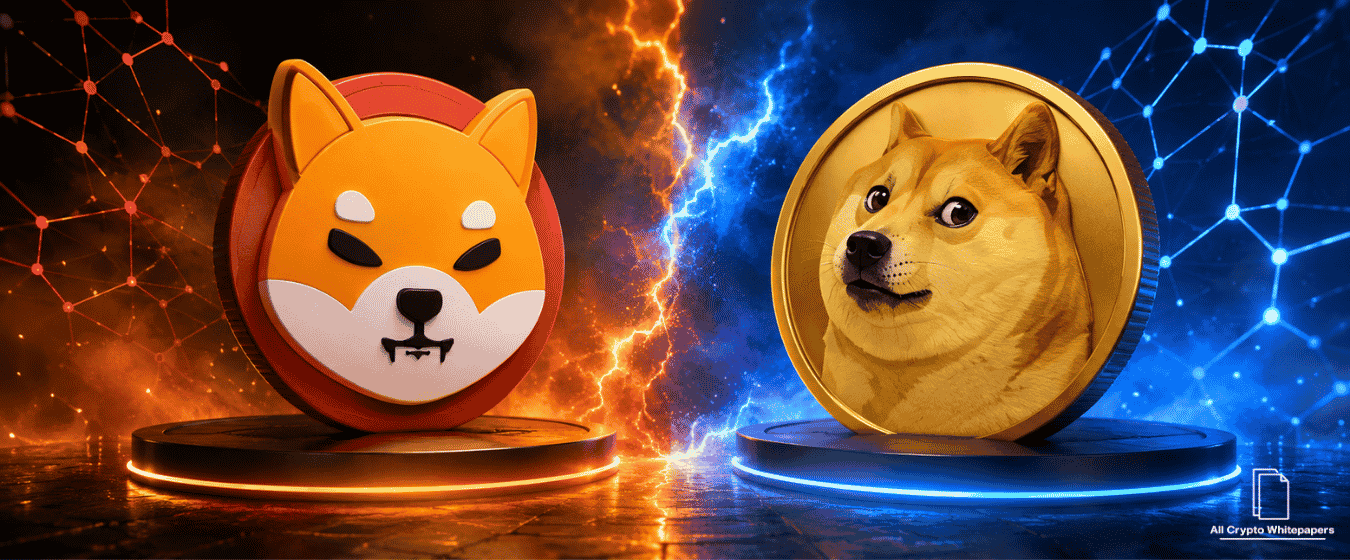

- Meme coins generally derive their popularity from internet culture, community engagement, and market speculation.
- DeFi tokens are associated with decentralized financial applications and may support governance, protocol access, or other functions.
- Both categories can experience extreme price volatility and liquidity risks.
- A token’s stated utility does not automatically translate into demand or long-term value.
- Whitepapers, tokenomics, security audits, and real user activity can help readers assess a project’s fundamentals.
The cryptocurrency market has two very different ways of attracting attention. Some tokens gain popularity through internet memes, viral trends, and online communities. Others are connected to decentralized finance (DeFi), where blockchain technology powers services such as lending, borrowing, and trading without traditional financial intermediaries.
This difference helps explain why meme coins vs DeFi tokens has become an important comparison for crypto users. Both can experience rapid price movements, attract active trading communities, and generate significant market interest. However, their purposes, value drivers, and underlying risks can be very different.
A meme coin might gain popularity because a celebrity mentions it or a community turns it into a viral trend. A DeFi token might gain attention because a decentralized exchange attracts more users or a lending protocol expands its services.
Neither category guarantees success. Understanding how these tokens work, what creates demand for them, and where their risks come from can help readers evaluate crypto projects more carefully.
What Are Meme Coins?
Meme coins are cryptocurrencies inspired by internet memes, jokes, popular characters, or online communities. Their appeal often comes from cultural relevance and the excitement surrounding their communities rather than a clearly defined financial product.
Dogecoin (DOGE) is one of the best-known examples. It began as a cryptocurrency inspired by the popular Doge internet meme and developed a large community over time.
Shiba Inu (SHIB) is another prominent example. Although it started as a meme-inspired token, its broader ecosystem has expanded to include additional crypto-related products and initiatives.
These examples illustrate an important point: meme coins do not all follow the same development path. Some remain primarily community-driven assets, while others attempt to introduce additional uses.
What Drives Meme Coin Prices?
Several factors can influence meme coin demand:
- Social media attention: Viral posts and online discussions can bring new buyers into a market.
- Community strength: Active communities can support awareness and trading activity.
- Celebrity attention: Public endorsements or mentions can affect short-term sentiment.
- Market speculation: Traders may purchase tokens because they expect other buyers to push prices higher.
- Exchange availability: Listings can make a token accessible to a larger audience.
However, attention is not the same as sustainable demand. A meme coin can gain value quickly when excitement rises and lose much of that value when interest fades.
Most importantly, popularity alone does not establish a token’s fundamental value.
What Are DeFi Tokens?
DeFi tokens are crypto assets associated with decentralized finance applications and protocols. These applications use blockchain technology and smart contracts to provide financial services without relying entirely on traditional intermediaries.
DeFi platforms can support activities such as decentralized trading, crypto lending, borrowing, and liquidity provision.
Unlike a typical meme coin, a DeFi token may have a defined role within a financial protocol. Depending on the project, that role could include voting on governance proposals, participating in protocol incentives, or accessing particular features.
However, not every DeFi token provides the same rights or benefits. Some tokens primarily support governance, while others have additional functions. Holding a governance token does not necessarily give someone a claim on a protocol’s revenue or assets.
Examples of DeFi Tokens
Several established projects illustrate different approaches to decentralized finance.
Uniswap (UNI) is associated with Uniswap, a decentralized exchange protocol. UNI is primarily known for its governance role within the ecosystem.
Aave (AAVE) is associated with the Aave decentralized lending protocol. The token has governance functions and other protocol-specific mechanisms.
Maker’s former MKR token was associated with the Maker protocol, which developed the Dai stablecoin ecosystem. The protocol underwent a major rebranding and token transition to Sky, so readers should check the project’s official documentation for the current token structure.
These examples show why examining a project’s actual token design matters. A protocol can provide a useful financial service without its token necessarily capturing that service’s economic value.
Meme Coins vs DeFi Tokens: Key Differences
The main difference is the reason each token exists and what may support demand for it.
| Feature | Meme Coins | DeFi Tokens |
| Primary purpose | Often community, entertainment, and speculative trading | Associated with decentralized financial applications |
| Main demand drivers | Social trends, sentiment, community, and speculation | Protocol usage, governance, incentives, and market demand |
| Common use cases | Trading, tipping, payments in some ecosystems, and community access | Governance, protocol functions, and ecosystem incentives |
| Fundamental analysis | Community activity, distribution, liquidity, and any actual utility | Protocol usage, token design, governance, security, and incentives |
| Revenue connection | Often absent or indirect | Depends on the protocol and token design |
| Price volatility | Can be extremely high | Can also be extremely high |
| Main risks | Hype cycles, concentrated ownership, low liquidity, and manipulation | Smart contract exploits, economic design flaws, governance attacks, and token dilution |
These are general differences rather than strict rules. Some meme coins develop practical uses, while some DeFi tokens have limited utility beyond speculative trading.
The category alone cannot tell you whether a token is well designed or likely to succeed.
Utility vs Hype: Where Does Token Value Come From?
One of the biggest differences between meme coins and DeFi tokens is how investors evaluate their demand.
For meme coins, demand often depends on how many people want to own and trade the token. Community identity, online visibility, and market sentiment can all play important roles.
For DeFi tokens, analysts may also examine the activity of the underlying protocol.
For example, a decentralized lending platform might attract users who deposit crypto assets or borrow against their holdings. Analysts can study its liquidity, borrowing demand, fees, security history, and governance structure to understand how the protocol operates.
But there is an important distinction between protocol activity and token value.
A DeFi platform can attract users without generating meaningful demand for its governance token. Similarly, a protocol can report substantial trading volume without passing those benefits directly to token holders.
A careful analysis should therefore ask two separate questions:
- Does the project provide a useful product or service?
- Does its token have a clear economic or functional relationship with that product?
The answers can be different.
Meme coins deserve the same scrutiny. If a project claims to offer payments, gaming features, or ecosystem access, readers should verify whether those features exist and whether people actually use them.
Tokenomics: Why Supply and Distribution Matter
Tokenomics describes how a crypto token is created, distributed, and managed. It can influence both meme coins and DeFi tokens.
For any project, examine the total supply, circulating supply, distribution among holders, and any planned token releases.
A token with a large supply is not automatically cheap. Its market capitalization, liquidity, and future supply changes matter more than the price of an individual unit.
For DeFi tokens, additional questions may include whether the protocol issues new tokens as incentives, how governance works, and whether token holders receive any benefits under the project’s rules.
For meme coins, concentrated ownership can create another concern. If a small number of wallets control a large share of the supply, significant selling by those holders may put pressure on the market.
Blockchain explorers can help readers investigate wallet distributions and transactions. However, wallet addresses do not always reveal the identities of their owners, and several addresses may belong to one entity.
A whitepaper can provide useful information about token design, but its claims should be checked against on-chain data and the project’s current documentation.
Which Is Riskier: Meme Coins or DeFi Tokens?
Both categories carry substantial risks, although the sources of those risks can differ.
Risks of Meme Coins
Meme coins can be vulnerable to sudden changes in social sentiment. A token that attracts buyers during a viral trend may struggle to maintain demand when attention moves elsewhere.
Other risks include concentrated ownership, thin liquidity, misleading promotional claims, impersonation tokens, and scams involving newly launched assets.
Some tokens may also have limited development activity or no meaningful use beyond trading.
Risks of DeFi Tokens
DeFi tokens face market risks as well as risks connected to the underlying protocol.
Smart contract vulnerabilities can lead to stolen or lost funds. Poorly designed lending mechanisms, oracle failures, governance attacks, and liquidity shortages can also affect a protocol.
Token holders may face dilution from new token issuance or discover that the token offers fewer economic benefits than they expected.
Using a DeFi application can introduce additional risks that simply holding its token does not. For example, depositing assets into a lending protocol exposes a user to the protocol’s operational and smart contract risks.
Neither category should be treated as safe simply because a project has a large community, a recognizable brand, or an established market presence.
How to Evaluate a Meme Coin or DeFi Token
Before researching a token, start with its official website, documentation, and whitepaper. Then compare the project’s claims with evidence from its product, blockchain activity, and independent security reviews.
Use the following checklist:
- Read the whitepaper. Identify the project’s purpose, technical design, token supply, distribution, and roadmap. Check whether the document is current.
- Investigate the team and development activity. Look for credible information about the developers, public updates, and evidence of continued work. Anonymous teams are not automatically fraudulent, but limited transparency can make accountability harder to assess.
- Check token distribution. Review major holders, circulating supply, liquidity, and upcoming unlocks where applicable.
- Verify actual usage. For a meme coin, examine whether claimed features are available and whether there is meaningful activity beyond speculation. For a DeFi protocol, investigate active users, liquidity, borrowing activity, and relevant fees.
- Review security risks. Look for independent smart contract audits, known vulnerabilities, and explanations of how the protocol manages security. An audit can reduce uncertainty, but it does not guarantee safety.
- Understand the token’s role. Determine whether the token supports governance, access, incentives, or another function. Do not assume that owning a token gives you rights to protocol revenue.
- Consider liquidity and downside risk. Check whether trading activity is sufficient for your intended transaction size. Remember that a token can become difficult to sell during a market downturn.
These checks cannot eliminate risk, but they provide a stronger basis for evaluating a project than social media excitement alone.
Meme Coins vs DeFi Tokens: Which Is Better?
There is no universal winner because the two categories serve different purposes and contain projects with widely varying designs.
Meme coins may appeal to traders interested in internet culture, community-driven assets, and speculative market movements. Their performance can depend heavily on sentiment and continued attention.
DeFi tokens may appeal to users interested in decentralized financial applications, protocol governance, and blockchain-based financial infrastructure. However, the existence of a working protocol does not guarantee that its token will perform well.
The more useful question is not which category is better, but which individual project has a credible purpose, transparent tokenomics, sufficient liquidity, and risks that a user understands.
For researchers, the project’s whitepaper is a starting point rather than proof of quality. Compare its claims with actual product usage, current documentation, security information, and on-chain evidence.
The bottom line: Meme coins often draw attention through culture and community, while DeFi tokens are associated with financial applications. Both can be speculative, and neither category guarantees sustainable demand or positive returns.
Frequently Asked Questions
1. What is the main difference between meme coins and DeFi tokens?
Meme coins generally gain popularity through internet culture, community engagement, and speculation. DeFi tokens are associated with decentralized financial protocols and may support governance or other protocol functions.
2. Are DeFi tokens safer than meme coins?
Not necessarily. DeFi tokens can face smart contract exploits, governance attacks, liquidity problems, and token dilution. Meme coins face risks such as extreme volatility, concentrated ownership, and fading market interest.
3. Can a meme coin have real utility?
Yes. Some meme coins develop payment features, community access, or broader ecosystem applications. However, claimed utility should be verified, and practical use does not guarantee lasting demand for the token.
4. Do DeFi token holders earn protocol revenue?
Not automatically. Token rights depend on the project’s design and applicable rules. Some tokens provide governance rights or participate in specific mechanisms, while others do not give holders a direct claim on protocol revenue.
5. How can I research a crypto token before buying it?
Read its whitepaper and official documentation, review tokenomics and wallet distribution, check liquidity and actual usage, and investigate security audits and known risks. Never rely on promotional claims alone.
Disclaimer: This content is for informational and educational purposes only and should not be considered financial, investment, or legal advice. Always conduct your own research before investing in cryptocurrencies or blockchain-related assets. This article was originally published on AllCryptoWhitepapers.com